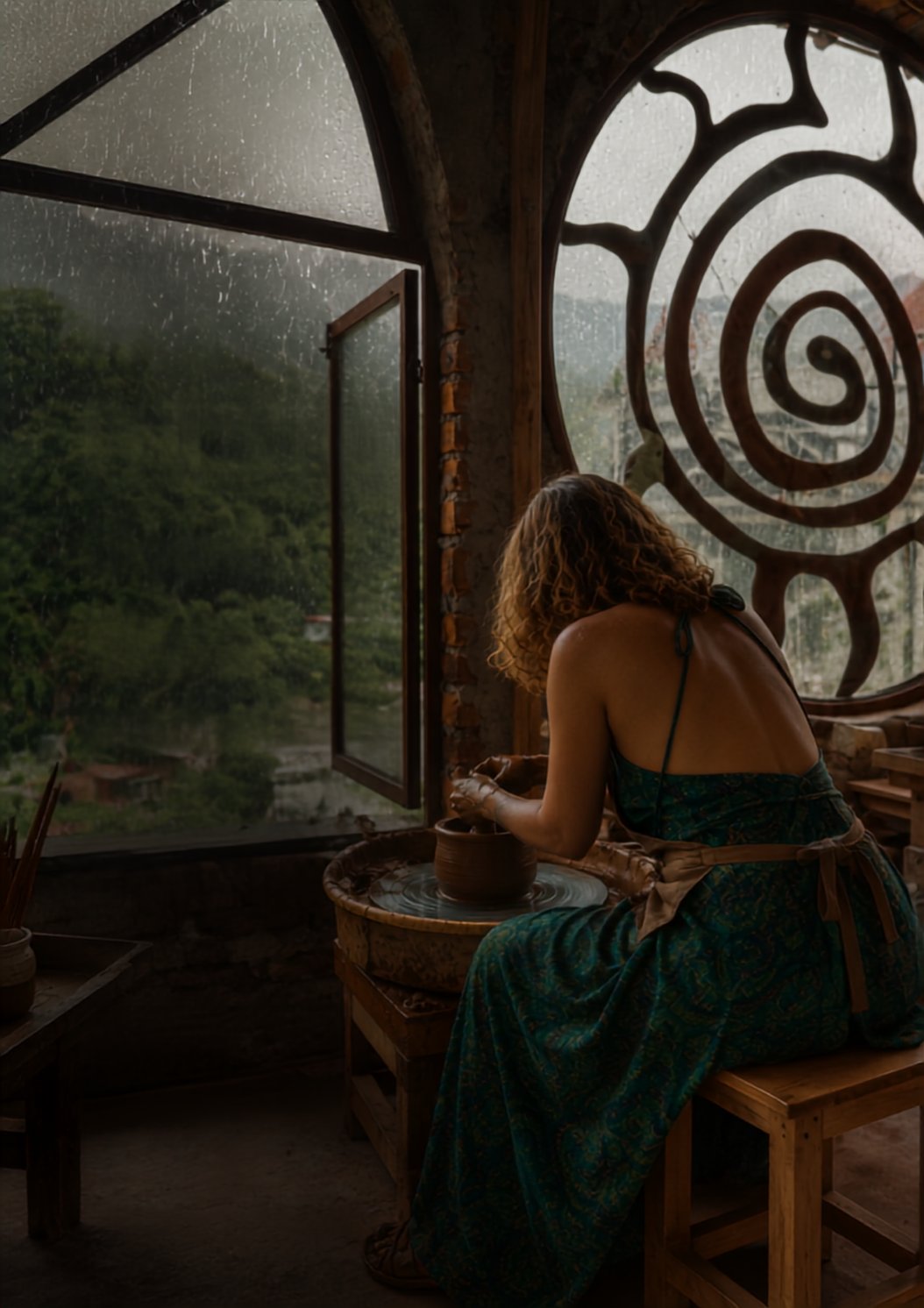
The People Who Know Rishikesh Best All Say the Same Thing About the Monsoon
Why long-timers quietly love July and August in Rishikesh, and what the rest of us miss by skipping the season.
There's a pattern anyone who's spent real time here will recognise. You ask a long-timer, someone who's lived in Rishikesh for years, or returns every single season without fail, when their favourite time is. They pause. Then they say: monsoon. Then they look faintly guilty about it, like they've let slip something they were meant to keep for themselves.
Ask why, and the explanation never comes out clean. It arrives in fragments. The colour of the hills. The Ganga in full, roaring flow. Waterfalls you didn't know existed until last week. The fact that you can cross Ram Jhula without colliding with somebody's selfie stick. Mist in the morning. Something about how the town feels once the tourists thin out. Something about the air itself. This is an attempt to put those fragments into actual sentences, for anyone hovering over a monsoon booking and getting cold feet from things they've read or seen shared in a panic on WhatsApp.
First: The Landslide Problem (Which Is Mostly a Media Problem)
Every July, like clockwork, the news cycle rolls out its monsoon-Uttarakhand package, flooded roads, collapsed hillsides, dramatic drone footage of somewhere very far away. Someone forwards it with "be careful if you're going to Rishikesh," and the caption does more damage than the actual weather.
Here's the geography that never makes the forward. The landslides and serious flooding making headlines happen up in the higher Himalayas, along the Char Dham routes, near Joshimath, around Devprayag and Rudraprayag and beyond, where the terrain is steeper, the rain heavier, the roads genuinely more exposed. That's not Rishikesh. That's often 150 to 200 kilometres away, across mountain passes that belong to an entirely different weather system than this foothills town on the Ganga.
Rishikesh, the town, the ghats, Tapovan, Laxman Jhula, the cafés, the ashrams, sits in the gentler Shivalik foothills. It gets rain, real rain some days, roads go wet, power flickers occasionally. But the town stays open, accessible, manageable through the monsoon with normal weather sense. People who actually live here don't pause their lives in July, usual places, ghats, market, an umbrella. They read the Kedarnath or Badrinath news with genuine concern, without ever confusing those places with their own street. You shouldn't either.
What Rishikesh Actually Looks Like in July and August
The first thing that hits you, arriving here in monsoon, is the green. It gets you before anything else does. Every hill turns a shade so vivid it borders on aggressive, the kind of colour that looks fake in photos and somehow even less believable in person. The forest above Tapovan, the ridgeline behind Laxman Jhula, the slopes across the river, all of it comes alive in a way the dry months simply can't manage.
The second thing is the Ganga. In October, the river is beautiful. In monsoon, it's magnificent, full, fast, jade-coloured, surging through the valley with a force you feel before you see it. You can't swim in it; current's too strong, level too unpredictable. But sitting at the ghats watching it pass is a different category of experience entirely. The sound alone justifies the trip, a low, continuous roar the river only makes this time of year, and it stays with you.
The third thing is the mist. It shows up most mornings ahead of the rain, then again late afternoon, rolling through the forest and making hills appear and vanish in slow motion. Stay somewhere with a view, up on the Tapovan hill, say, and you can watch it drift across the valley for an hour and lose track of time. We've watched guests do this with coffee going cold beside them. Worth it.
The Waterfalls
Waterfalls exist here year-round. In the monsoon, they transform. Neer Garh, the most accessible, a short forest trek from Laxman Jhula, the trail lined with wildflowers, goes from trickle to roar. Volume triples. The gentle two-tiered cascade of April becomes thunder in August, and the spray from the plunge pool reaches you before the water does.
That trail also runs through some of the most butterfly-dense forest near Rishikesh, which nobody mentions in the usual monsoon travel content. In the days after heavy rain, once the sun breaks through and the forest's still wet, butterflies arrive in numbers that feel borderline surreal, thousands, on the trail, on the wet road, on the walls, on your sleeve if you stand still long enough. Colours that look imported from somewhere else. Entomologists have names for all of them. The rest of us just stand there gawking, which is honestly correct.
Garud Chatti, further along the Neelkanth road, spills across seven levels in monsoon, misty curtains dropping into a pool, two old temples bookending the trail. Phool Chatti, further still, is wide rather than tall and stays untouched, no café, no signage, just water sliding over mossy ledges and the forest doing its thing. Patna Waterfall, inside the Rajaji buffer, turns from a polite dry-season curtain into a proper monsoon sheet, soaking everything within twenty metres of it.
Go in the morning. Wear shoes with actual grip. Don't swim against a strong current, that's not monsoon-specific advice, that's just advice. Beyond that, it's simply going and seeing.
The Drives
On a clear stretch between showers, and there are plenty of these, monsoon isn't rain wall-to-wall, despite its reputation, drive up from Rishikesh into the hills and you'll hit a point where the clouds sit below you. Not a metaphor. Head toward Kunjapuri, toward Narendra Nagar, toward Kanatal and the higher Tehri Garhwal reaches, and within the hour the valley fills with cloud while you sit above it, a white sea with Himalayan peaks poking through at the horizon. Rishikesh itself disappears into weather somewhere below you. Up where you are, the sky's doing nothing but being clear.
This particular trick is monsoon-only. Any other season, you just drive through hills like a normal person. In monsoon, you drive through clouds. The road to Kunjapuri Temple is manageable in most conditions, and the sunrise from there, 1700 metres up, full Himalayan panorama north, valley fog pooled below, ranks among the best views in the region. Pick a morning after overnight rain's cleared, when the sky's deciding something. You'll understand instantly why the long-timers refuse to leave.
The Town Itself
Rishikesh without the crowds is practically a different town. You can cross Ram Jhula and Laxman Jhula without stopping every few metres for someone's photoshoot. The ghats have actual room to sit. The temples, Trayambakeshwar, Bharat Mandir, Neelkanth Mahadev up in the hills, are attended by people who show up daily, not once for a selfie. The ashrams do what they actually do when nobody's filming: 6am yoga with a room of serious practitioners, Ganga Aarti at dusk with oil lamps against the mist, bells and river sound braiding together in a way that's genuinely hard to describe unless you've stood there for it.
Chai stalls stay open. Local kitchens keep cooking. Markets keep their produce coming. Nothing's closed, the town has simply exhaled. The Ganga Aarti earns its own line: oil lamps glowing through river mist, bells carrying through damp air, the river running full and dark below the ghats. If you've caught it in peak season, you know it's beautiful already. In monsoon, it edges toward private.
A Few Honest Realities
The humidity is real, and it does not care about your packing list:
- •Rishikesh in July is warm and damp, not dry-mountain-town weather, pack light, quick-dry fabrics and a proper rain jacket.
- •Adventure sports get limited. River rafting closes on most routes through monsoon; bungee and similar depend on conditions. Built your trip around those? Come back in October.
- •Waterfall treks are best done in the morning before the day's rain starts, and proper footwear actually matters here.
- •Some higher routes need a local guide. Roads toward Kedarnath, Badrinath, and the Valley of Flowers genuinely warrant checking before you go, those areas feel monsoon conditions far more sharply than Rishikesh does.
None of this is a reason to skip the trip. It's just the season's own logic, and it asks you to travel with a little more attention than usual. That's all.
What the Monsoon Is Actually For
Ask a long-timer properly, and they'll tell you monsoon was never really about doing. It's about being. Everything Rishikesh does year-round, yoga, meditation, the river, the mountains, the particular spiritual undertone of the place, deepens here. Stillness gets easier to find. Practice gets more room to breathe. The river asks for your attention and asks for nothing back in return.
Visitors chasing a transformative October are competing with several thousand other people chasing the exact same thing. The person who comes in August gets the same experience with all the space cleared around it. That's the part the long-timers actually know. Rishikesh isn't most beautiful in the monsoon because the weather's pleasant, it isn't, not particularly. It's because the place finally shows itself once it thinks nobody's watching.
Come in the monsoon. Watch it.
The Aavya team · Upper Tapovan, Rishikesh
Related reading from the Journal
- Rishikesh Guide
Stuck Indoors This Monsoon? Try Being Stuck at Aavya Instead.
You know the feeling. It's humid, it's grey outside, and you really don't want to step out. So you don't. Days…
Read article → - Rishikesh Guide
Why Aavya Might Be the Best Place to Be in Rishikesh During the Monsoon
Let's get the obvious worry out of the way. You're wondering if it'll just rain the whole time. Yes, it might.…
Read article → - Rishikesh Guide
Bringing Kids to Aavya. Here's What Actually Happens.
Somewhere around the second morning, you realise your kid has been gone for two hours and you're not anxious a…
Read article →