By The Aavya team
Ice baths in winter: what changes?
As the evenings cool in Tapovan, the question is fair enough: why get into cold water when the weather is already making an effort?
For some people, the cooler months make the sauna especially inviting. Others remain interested in the cold plunge. Winter can be a pleasant time to use the Tapas circuit, but it is not automatically the best season to begin an ice bath practice.
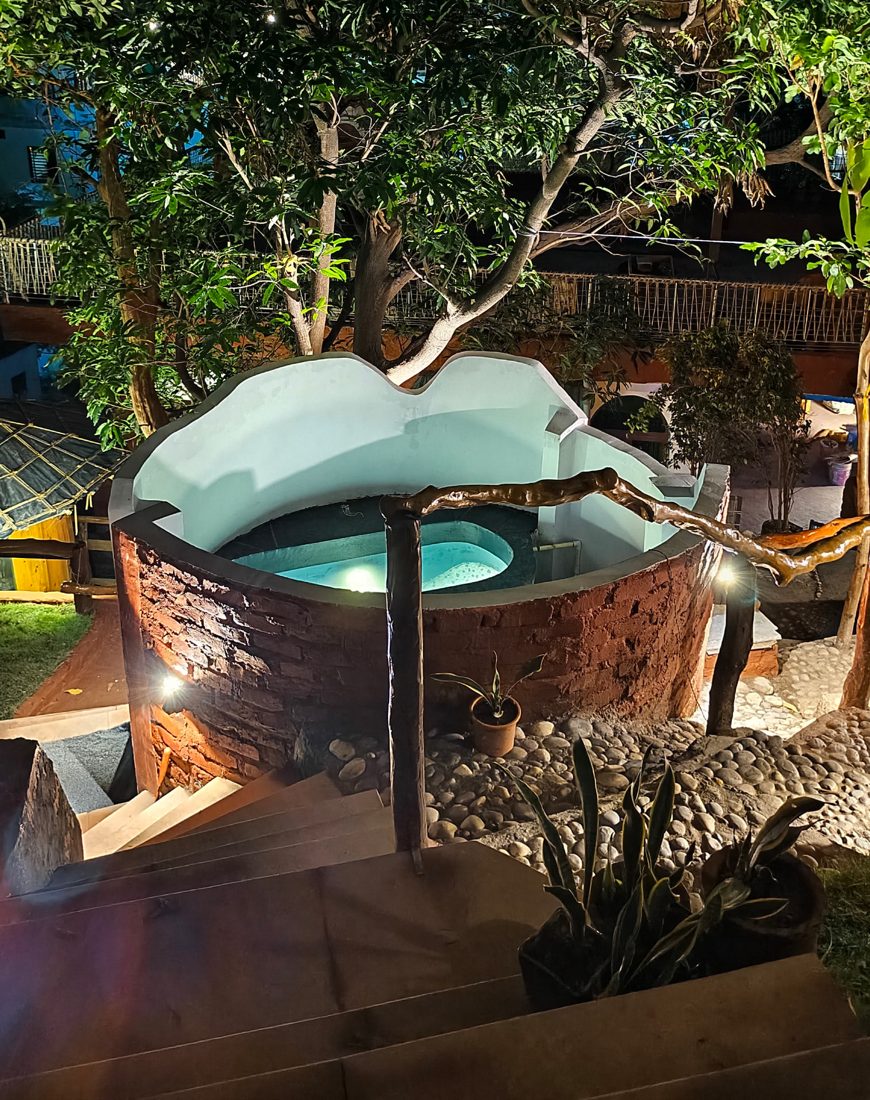
At Aavya in Upper Tapovan, Rishikesh, the plunge is chilled throughout the year. What changes in winter is the temperature around it, and how carefully you need to manage the time after leaving the water.
The water is only part of the exposure
In warm weather, you step out into air that may feel immediately comfortable. In winter, particularly early or late in the day, you can continue losing heat while standing outside in wet swimwear.
That changes the practical arrangements. Your towel, dry clothes and a place to warm up should be ready before you enter. Rest afterwards is still important, but it should not mean remaining cold for the sake of following a routine.
You may encounter advice to finish on cold and let the body rewarm by itself. Whatever the proposed benefits, it should never become a reason to delay getting warm when you need to. A safe, comfortable recovery takes priority over completing a protocol.
Can regular practice help?
Repeated cold exposure can reduce the initial gasp and rapid breathing known as the cold shock response. Researchers at the University of Portsmouth have found that this habituation can persist beyond the period of practice.
That is useful, but it is not winter-proofing. Someone accustomed to cold water can still cool too much. Feeling less alarmed by the temperature does not reliably tell you how cold your body has become.
For a beginner, the season matters less than the conditions of the first visit: appropriate guidance, a manageable exposure and a clear plan for warming up. There is no obligation to wait for January, and no advantage in choosing the coldest possible morning.
Coming to Tapas in colder weather
Bring a towel and warm, dry layers, including socks. Have them within easy reach. Follow the facilitator’s guidance on the day rather than aiming to repeat a duration you managed in summer.
Tell the team about heart or blood pressure concerns, circulation problems, Raynaud’s or reactions to cold. Seek medical advice before starting if you have a relevant condition, are pregnant or are uncertain about suitability.
Avoid alcohol, never plunge alone and speak up promptly if you feel unwell. Persistent shivering, dizziness or difficulty warming up need attention. Looking composed is not part of the booking.
A morning practice in development
We are exploring a sunrise practice at Aavya with gentle movement, Surya Namaskar and a guided cold dip. The intention is to spend some time outdoors before the day becomes busy.
The format and timing are still being worked out. We will share confirmed details when it is ready; for now, the afternoon guided Fire & Ice circuit remains the regular option.
Visit Tapas and enquire about a session: Guided sessions run daily from 4:00–6:00 PM at ₹2,500 per person. Facility access is ₹2,000; see the Tapas session times for current access hours. Check availability and suitability with the team.
Related reading: Why heat? Inside the sauna at Aavya and what to expect from an ice bath.
Further reading: Cold-water habituation research; cold shock adaptation and anxiety.
Related reading from the Journal
- Contrast Therapy
Why heat? Inside the sauna at Aavya
There is a point in the sauna when the conversation thins out. Someone moves to a lower bench. Someone closes…
Read article → - Contrast Therapy
Why cold? What to expect from an ice bath
Before a first ice bath, most people ask how long they should stay in. Once they enter, the question tends to…
Read article → - Contrast Therapy
Why combine sauna and ice baths?
The sauna and the ice bath tend to attract different loyalties. Some people are quite happy on the warm bench…
Read article →