By The Aavya team
Why cold? What to expect from an ice bath
Before a first ice bath, most people ask how long they should stay in. Once they enter, the question tends to become more immediate.
Cold water gets your attention quickly. Your breath changes, your shoulders tighten and leaving seems like a sensible plan. None of this means you are particularly bad at cold plunges. It is a normal response to sudden cooling.
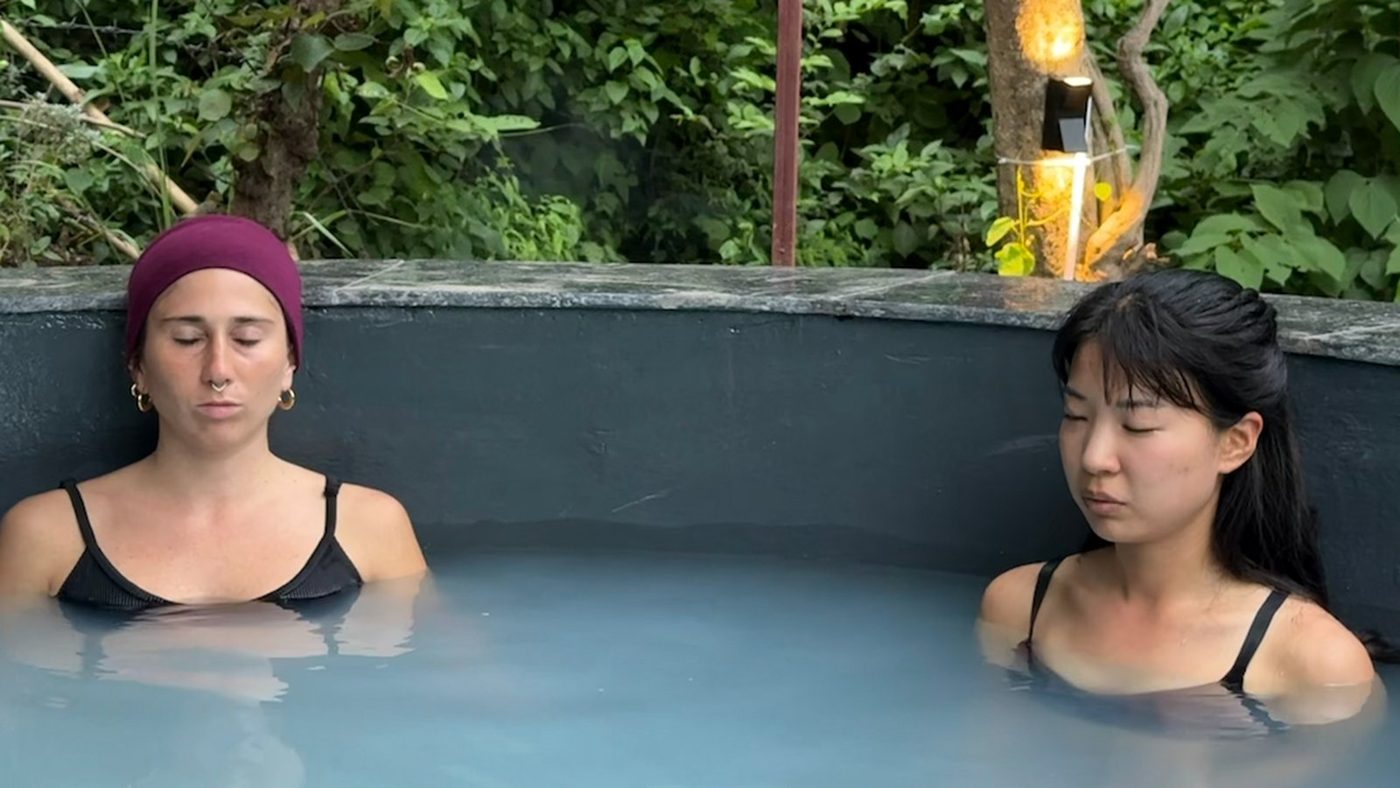
At Tapas, our Fire & Ice circuit at Aavya in Upper Tapovan, the cold plunge is guided. Understanding what is happening makes the experience less mysterious and helps keep the focus where it belongs: on a manageable exposure, with someone there to assist.
Why the first moments feel intense
The initial reaction is known as cold shock. Rapid cooling of the skin can cause an involuntary gasp, faster breathing and a rise in heart rate and blood pressure.
This deserves more respect than it sometimes gets online. An ice bath is a physical stress, including for someone who exercises regularly. Fitness does not remove the need for a careful introduction.
A facilitator helps you enter gradually and keep your head above water. Breathe normally and follow their guidance. Do not hyperventilate or practise breath-holding in or beside the bath. If you feel unwell, say so and get help to leave.
What are the possible benefits?
Some people enjoy the alertness after a short cold plunge. Others describe a lift in mood or a sense of having done something they had been avoiding. Those experiences can be worthwhile without being turned into a guarantee.
Research suggests cold-water immersion can offer modest, short-term relief from muscle soreness after strenuous exercise. Evidence for mood benefits is mixed. Broad claims about treating anxiety, producing lasting weight loss or transforming immunity need much more support.
Temperature and duration also matter when interpreting a study. An experiment involving a longer immersion in moderately cold water cannot tell us exactly what happens during a brief, colder dip. This is why we have left the impressive dopamine percentages out of this article.
Does it become easier with practice?
Repeated exposure can reduce the initial cold shock response. Research from the University of Portsmouth describes this as habituation: the body becomes more familiar with the stimulus.
Familiarity has limits, though. Feeling calmer does not mean you can safely remain in cold water indefinitely. It also does not prove that an ice bath will make you calmer in every difficult conversation. That would be a considerable service to promise from a small tub.
The useful starting point is simpler. Learn how you respond, accept guidance and stop treating the clock as a target.
Your first cold plunge at Aavya
Tell the team about relevant medical conditions before booking. Heart disease, blood pressure concerns, circulation problems, Raynaud’s and cold urticaria need particular attention. If you are pregnant or unsure whether cold immersion is suitable, seek medical advice first.
Never enter alone or after alcohol. Have a towel and dry clothes ready, and allow time to warm up after leaving. A shorter exposure is entirely acceptable; completing a preset duration is not the purpose of the visit.
Visit Tapas and enquire about a session: The guided Fire & Ice circuit runs daily from 4:00–6:00 PM at ₹2,500 per person, with guidance during the cold plunge.
Read next: Why combine sauna and ice baths? and ice baths in winter: what changes?.
Further reading: Cold shock and habituation; anxiety and cold shock adaptation.
Related reading from the Journal
- Contrast Therapy
Why heat? Inside the sauna at Aavya
There is a point in the sauna when the conversation thins out. Someone moves to a lower bench. Someone closes…
Read article → - Contrast Therapy
Why combine sauna and ice baths?
The sauna and the ice bath tend to attract different loyalties. Some people are quite happy on the warm bench…
Read article → - Contrast Therapy
Ice baths in winter: what changes?
As the evenings cool in Tapovan, the question is fair enough: why get into cold water when the weather is alre…
Read article →