By The Aavya team
Why heat? Inside the sauna at Aavya
There is a point in the sauna when the conversation thins out. Someone moves to a lower bench. Someone closes their eyes. The person who arrived with a busy afternoon ahead of them is, for the moment, just sitting.
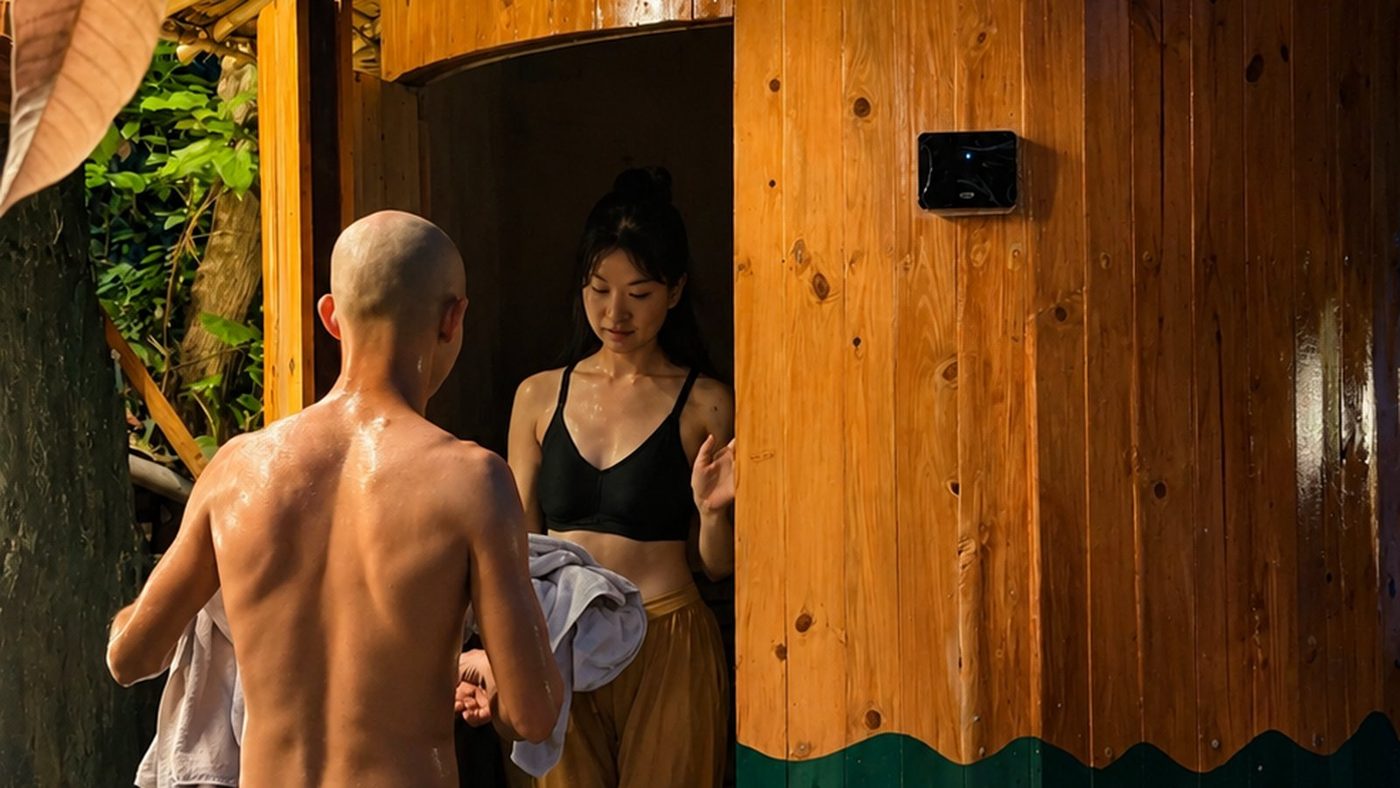
At Aavya, the sauna is a deodar-lined cabin beside the forest in Upper Tapovan, Rishikesh. It forms the heated part of Tapas, our Fire & Ice circuit. People often ask what sitting in a hot room actually does for them. There is a useful answer, beyond the pleasure of being warm.
There is something particularly satisfying about entering that warmth after an afternoon in the cool mountain air. Winter makes the contrast noticeable before anyone has even reached the plunge.
What happens to the body in a sauna?
As your skin warms, the body works to release heat. Blood vessels near the skin widen, sweating increases and your heart rate rises. Sitting still does not mean your body is idle.
Researchers at the University of Eastern Finland have measured changes in heart rate, blood pressure and the flexibility of arteries during and after sauna bathing. These findings help explain why heat exposure is being studied for cardiovascular health. They do not make a sauna a substitute for exercise. You still have to walk up the hill to Aavya.
Warmth can also feel welcome when you are stiff or tired. The experience is familiar to anyone who has enjoyed a warm bath after a long day. How much relief you feel will vary, and a persistent injury needs more attention than a session in the sauna.
What does the research say?
Some of the best-known sauna research comes from Finland, where bathing is part of ordinary life. Long-term studies have found an association between more frequent sauna use and lower cardiovascular mortality.
That distinction matters. Researchers observed a pattern; they did not prove that sauna use alone produced it. The studies also reflect particular populations and bathing habits. A visitor trying a sauna in Rishikesh should not expect the same outcomes from one afternoon.
There is enough here to take heat seriously, without attaching a medical promise to every bead of sweat.
The quieter reason to sit
The appeal of a sauna is not entirely physiological. It is a place with very few demands. There is no class sequence to remember, no equipment to master and very little reason to check your phone.
For some people, that is the most useful part of the session. They have given themselves permission to stop for a while. Others prefer a little conversation. Both fit comfortably on the bench.
Tapas is a Sanskrit word associated with heat, discipline and effort. With Aavya in Tapovan, the name felt close to home. Here, the practice begins with paying attention to what you can comfortably manage.
Trying the sauna at Aavya
The guided circuit allows time for heat, a soak, a cold plunge and rest. Tell your facilitator if it is your first sauna. Take breaks, drink water and leave if you feel dizzy, nauseated or unwell. There is no useful reason to push through those symptoms.
Seek medical advice before heat exposure if you have a heart condition, blood pressure concerns, are pregnant or take medicines that affect your response to heat. Avoid alcohol before the session.
Visit Tapas and enquire about a session: Guided Fire & Ice runs daily from 4:00–6:00 PM at ₹2,500 per person. Ask the Aavya team about availability and suitability before booking.
Read next: Why cold? What to expect from an ice bath.
Further reading: Physiological effects of sauna bathing; sauna bathing and cardiovascular mortality.
Related reading from the Journal
- Contrast Therapy
Why cold? What to expect from an ice bath
Before a first ice bath, most people ask how long they should stay in. Once they enter, the question tends to…
Read article → - Contrast Therapy
Why combine sauna and ice baths?
The sauna and the ice bath tend to attract different loyalties. Some people are quite happy on the warm bench…
Read article → - Contrast Therapy
Ice baths in winter: what changes?
As the evenings cool in Tapovan, the question is fair enough: why get into cold water when the weather is alre…
Read article →