By The Aavya team
Why combine sauna and ice baths?
The sauna and the ice bath tend to attract different loyalties. Some people are quite happy on the warm bench and see no reason to leave it. Others arrive mainly for the plunge.
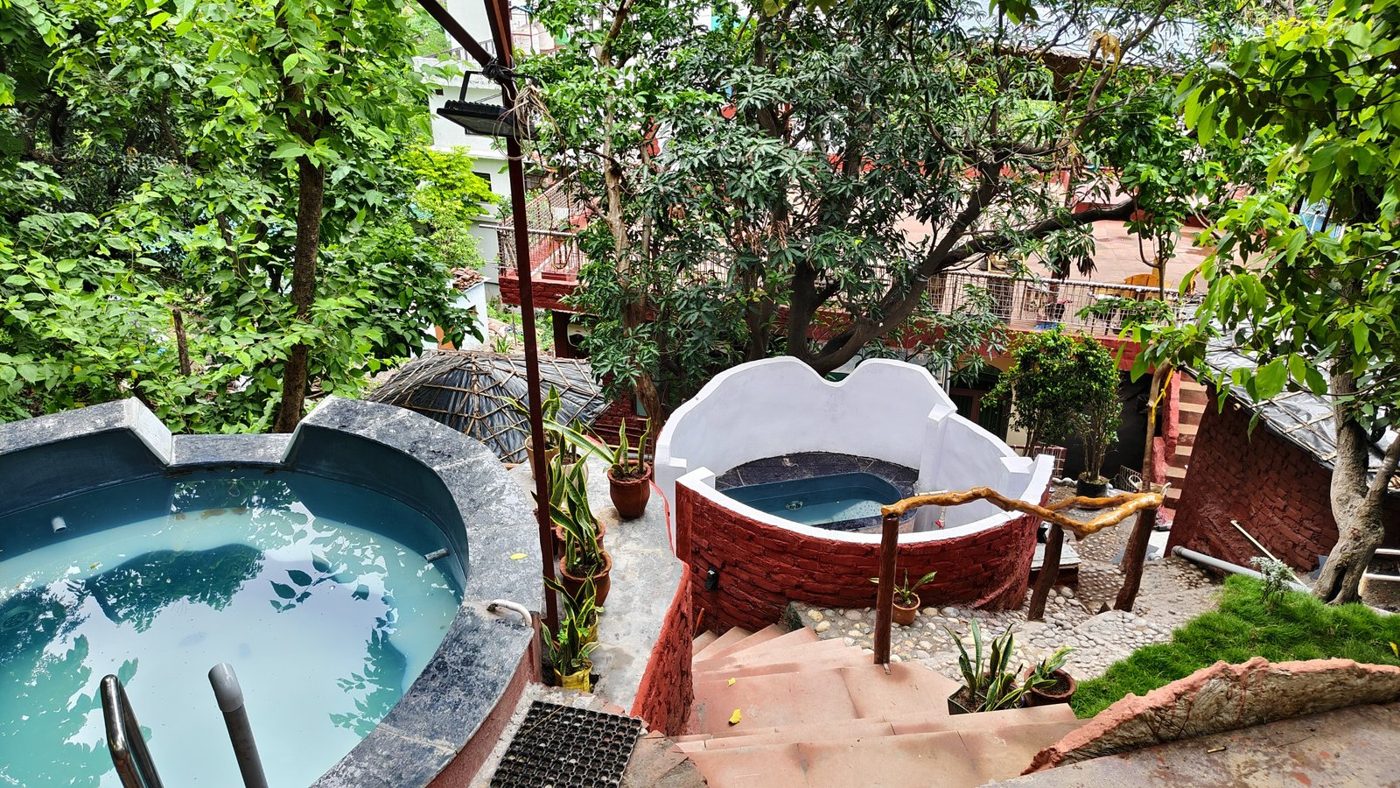
Tapas brings them into the same afternoon. At Aavya in Upper Tapovan, Rishikesh, our Fire & Ice circuit includes movement, a deodar sauna, an open-air soaking pool, a cold plunge and time to rest. The spaces between the stronger exposures are part of the experience.
Moving between heat and cold is commonly called contrast therapy. It is a straightforward idea, though explanations of its benefits can become rather elaborate.
What changes when you switch temperatures?
Heat and cold produce different responses. In the sauna, blood vessels near the skin widen as the body releases heat. During cold exposure, vessels near the skin generally narrow to help conserve it. Heart rate, breathing and blood pressure can also change.
You may have heard this described as a vascular pump. It is a proposed explanation for some effects of alternating temperatures, rather than proof that the circuit flushes out toxins or repairs circulation problems.
The combination also means a greater demand on the body. Feeling comfortable in the sauna does not automatically make a sudden cold plunge suitable. The transition needs guidance and room for individual differences.
What does contrast therapy research show?
A review published in PLOS ONE examined 18 trials of contrast water therapy after exercise. It found improvements in soreness and reduced loss of strength compared with passive rest. However, the trials had a high risk of bias, and there was little evidence that contrast water therapy was better than other recovery methods.
There is another useful distinction: those studies alternated warm and cold water. A circuit combining dry sauna, soaking and a cold plunge is not identical. The findings offer context, rather than a direct forecast of what every Tapas guest will experience.
Recovery is a reasonable area of interest. Claims that everyone will sleep better within two weeks, or develop a permanently calmer nervous system, go further than this evidence allows.
How the circuit works at Aavya
We begin with movement in the open-air zone. Mobility work, bars and rings are available, with the session adapted to the group.
The sauna follows. From there, the soaking pool provides a gentler pause before the cold plunge. A facilitator guides the cold exposure, and there is time afterwards to dry off, warm up and rest. Additional rounds depend on the session and on how you are feeling.
This slower arrangement matters to us. It leaves room to ask questions, sit quietly or talk to the people sharing the circuit. There is little benefit in rushing through everything simply because it is there.
How often should you practise?
Begin with a guided session and see whether you enjoy it and recover comfortably. There is no single schedule that suits everyone. More frequent exposure is not automatically better, and an internet protocol cannot account for your health, experience or response on the day.
Tell the team about medical concerns before participating. Seek medical advice where appropriate, avoid alcohol and stop if you feel unwell. You can also choose to skip an element.
Visit Tapas and enquire about a session: Guided Fire & Ice runs daily from 4:00–6:00 PM at ₹2,500 per person. Facility access is ₹2,000; ask the team which option suits your experience.
Visiting in the cooler months? Read our guide to ice baths in winter and what changes when the air temperature drops.
Further reading: Contrast Water Therapy and Exercise Induced Muscle Damage — Bieuzen and colleagues, PLOS ONE.
Related reading from the Journal
- Contrast Therapy
Why heat? Inside the sauna at Aavya
There is a point in the sauna when the conversation thins out. Someone moves to a lower bench. Someone closes…
Read article → - Contrast Therapy
Why cold? What to expect from an ice bath
Before a first ice bath, most people ask how long they should stay in. Once they enter, the question tends to…
Read article → - Contrast Therapy
Ice baths in winter: what changes?
As the evenings cool in Tapovan, the question is fair enough: why get into cold water when the weather is alre…
Read article →